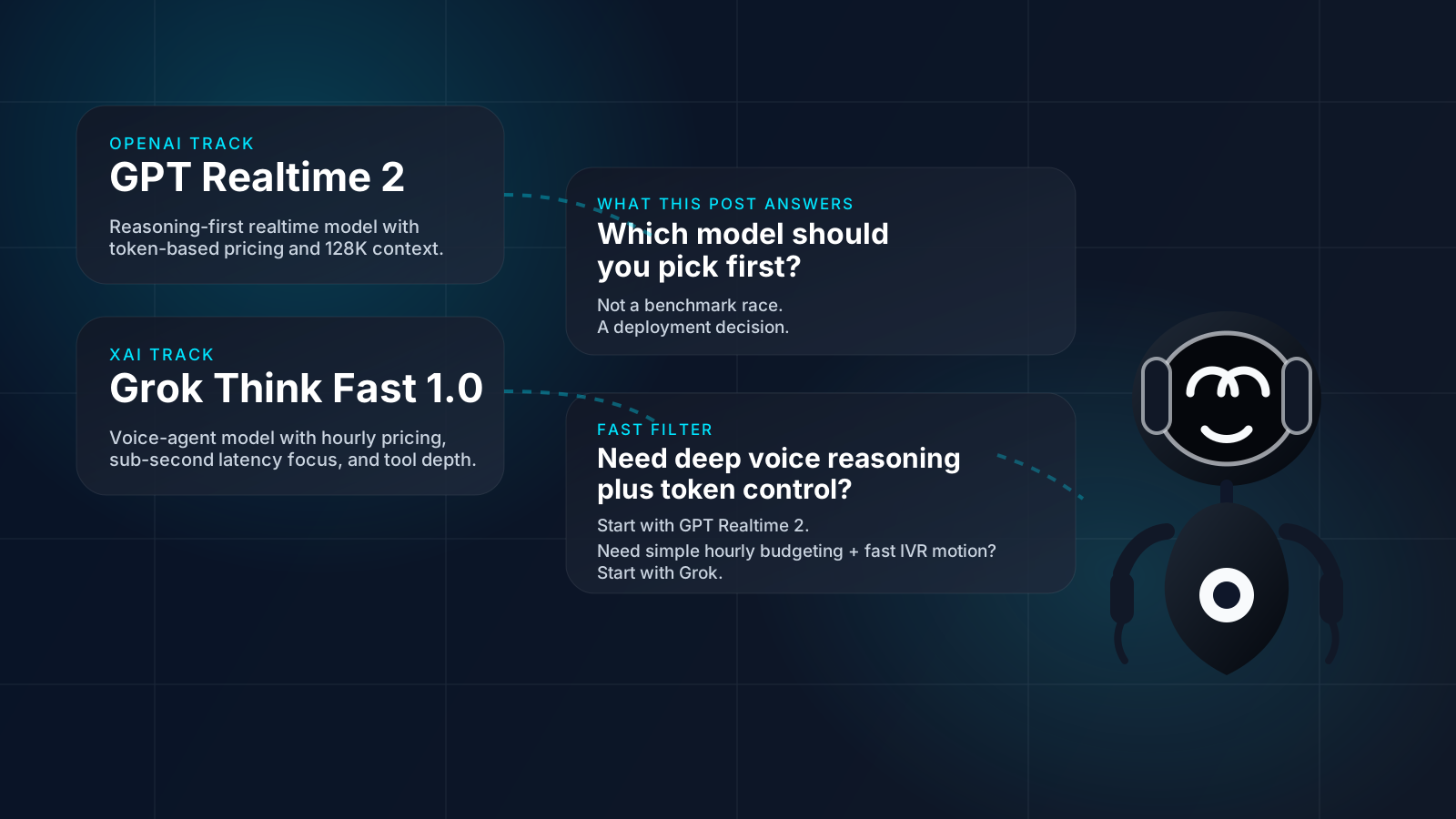
GPT Realtime 2 gives you finer reasoning and token controls. Grok Think Fast gives you a clean hourly voice runtime model.
- GPT Realtime 2 vs Grok Think Fast 1.0
- gpt realtime 2
- grok voice think fast 1.0
- realtime voice model comparison
- voice agent API pricing comparison
Most teams compare these models too loosely. This post compares the operational consequences, not just model claims.
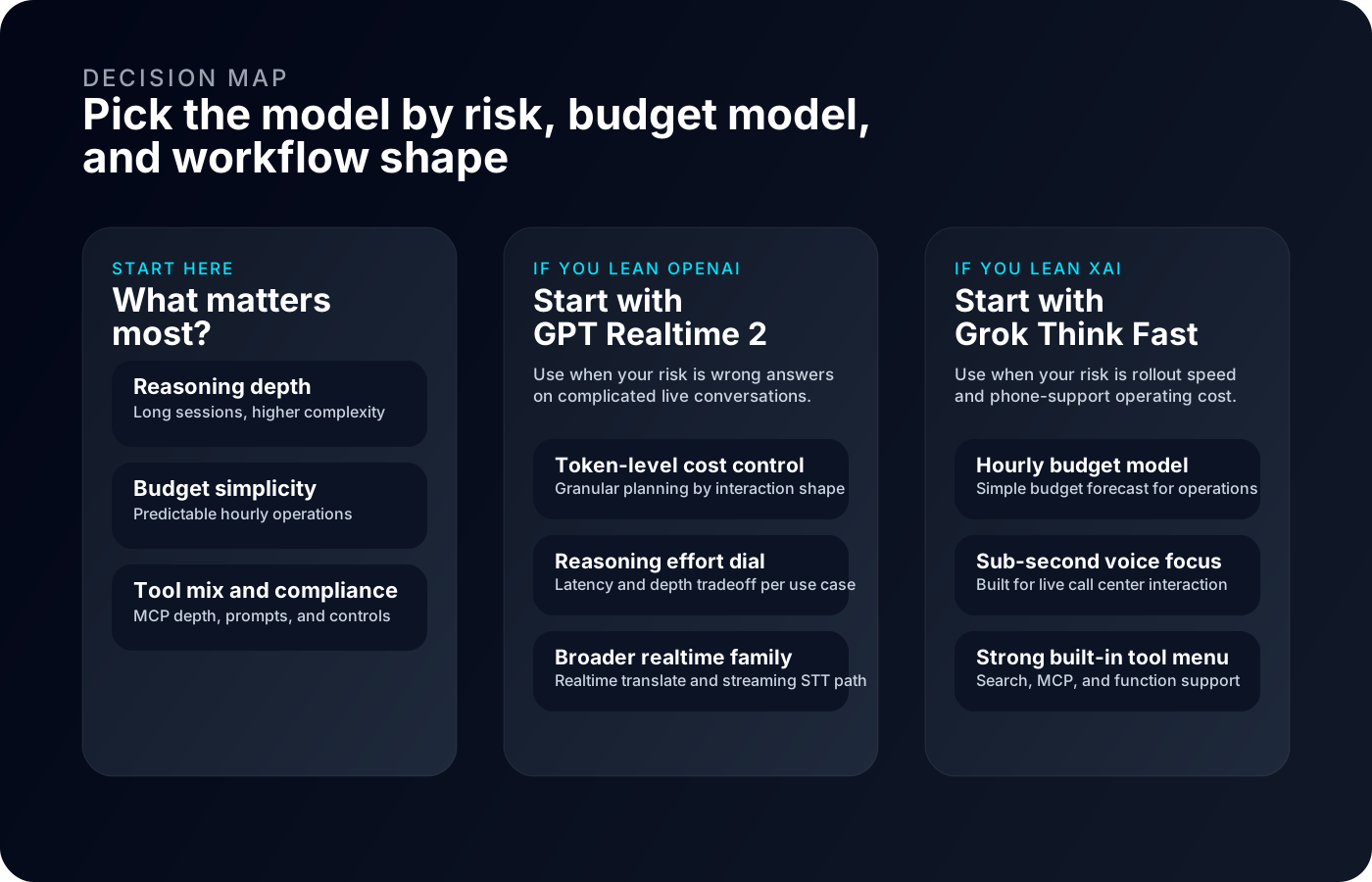
Choose between these models by the failure that costs the business more: reasoning mistakes or slow deployment.
GPT Realtime 2 is the stronger starting point when reasoning errors are expensive. Grok Think Fast 1.0 deserves the first test when rollout speed and predictable hourly budgeting dominate the decision.
Quick answer for search, AEO, and GEO
GPT Realtime 2 and Grok Voice Think Fast 1.0 are both production grade realtime voice models, but they have different operating profiles. OpenAI positions GPT Realtime 2 as a high reasoning realtime model with configurable reasoning effort and token based pricing in the Realtime API. xAI positions Grok Voice Think Fast 1.0 as its flagship voice agent model with a sub second voice stack and hourly runtime framing in xAI voice docs.
In practice, GPT Realtime 2 is usually the better fit when reasoning control and long-session reliability lead the requirements. Grok Think Fast 1.0 can be easier to justify when the team prioritizes rapid deployment and simple hourly budgeting.
What changed this month
On May 7, 2026, OpenAI announced a new generation of voice models, including GPT Realtime 2. In that release, OpenAI described GPT Realtime 2 as its first voice model with GPT 5 class reasoning and documented a larger 128K context window for longer agentic sessions.
On April 23, 2026, xAI announced Grok Voice Think Fast 1.0 as its flagship voice model via API, emphasizing multistep workflows, high volume tool calling, low latency behavior, and real call center use with Starlink.
Because the releases arrived within two weeks of each other, teams can now evaluate them head to head in the same procurement cycle.
Core comparison that actually matters
1. Pricing logic is different
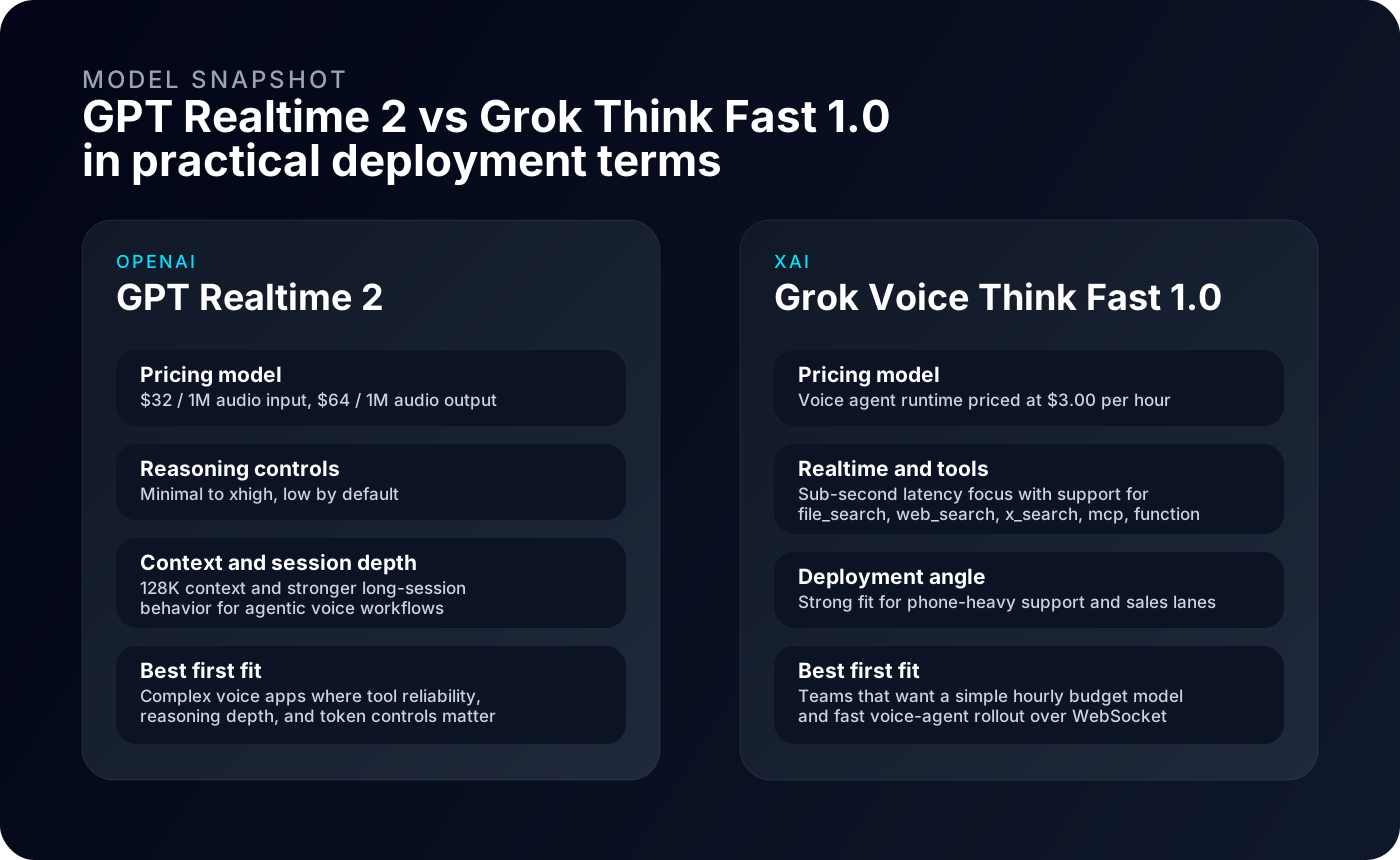
OpenAI documents GPT Realtime 2 with token pricing in realtime usage (for example, audio input and output token rates in its pricing section). xAI voice docs highlight hourly runtime pricing for the realtime voice agent path.
The pricing model changes the budget conversation. Teams comfortable with token economics may prefer OpenAI's controls; call-center teams may find an hourly runtime budget easier to assess. Price the expected workload in each model.
2. Reasoning control vs speed framing
OpenAI explicitly exposes reasoning effort levels in GPT Realtime 2. That is useful when you need different behavior across call types, such as low latency triage versus high stakes troubleshooting.
xAI emphasizes "think fast" behavior with low latency and practical call workflows. For teams chasing fast production motion, that framing is straightforward: keep the conversation responsive while still handling multistep tasks.
3. Tool behavior and integration style
Both stacks support tool use, but xAI voice agent docs clearly list file search, web search, x search, mcp, and function in session tool configuration. OpenAI newer release puts more attention on parallel tool calls, preambles, and recovery behavior in live conversation.
In plain terms: both can call tools, but they present the "how" a little differently.
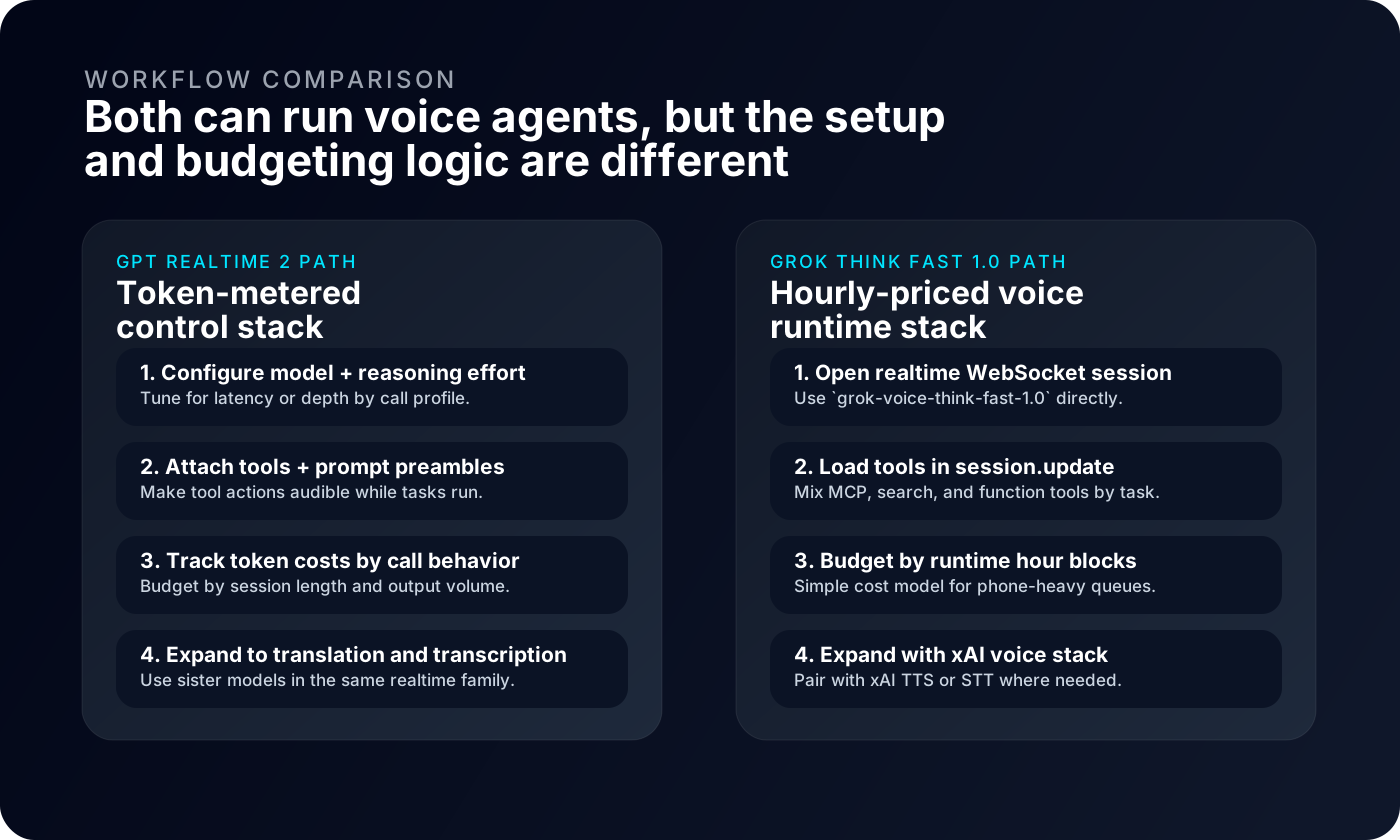
A case study style way to choose
Lets make this concrete with two realistic teams.
Team A: regulated support desk with expensive error cost
Wrong instructions on an account issue can create compliance problems. For this team, reasoning through unusual cases matters more than shaving time from a reply.
This team usually benefits from starting with GPT Realtime 2 because they can dial reasoning effort and run stricter prompt + tool policies around sensitive flows.
Team B: fast growth phone sales operation
This team needs a quick launch, flowing calls, and spending it can plan in hours of runtime. Leadership is prioritizing deployment speed and predictable operations.
This team often gets moving faster with Grok Think Fast 1.0 as a first pilot, especially if their workflow already maps well to xAI voice agent tooling and realtime session model.
Where each one wins right now
GPT Realtime 2 tends to win when:
- You need stronger control of reasoning depth by workflow.
- You need long, coherent sessions with heavier context demands.
- You want to stay inside one OpenAI realtime family that now includes translation and streaming transcription models.
Grok Think Fast 1.0 tends to win when:
- You want fast voice agent rollout with a straightforward realtime endpoint.
- You prefer budget communication in hourly runtime terms.
- You are building phone heavy support or sales lanes and want a concise voice agent stack.
The SEO, AEO, and GEO checklist for this topic
If you are publishing model comparisons, this is where most posts fail. They sound polished but they are hard to quote and hard to trust.
- SEO: use exact entities (gpt realtime 2, grok voice think fast 1.0), exact dates, exact pricing model type, and official source links.
- AEO: answer the choice question early in plain language, then show concrete conditions for each model.
- GEO: structure the post so an AI system can cleanly extract definitions, tradeoffs, and recommendation logic without guessing.
In other words, do not write a model fan post. Write a decision document.
FAQ
Is GPT Realtime 2 always better than Grok Think Fast 1.0?
No. "Better" depends on what failure hurts your team most. If mistakes in reasoning are expensive, GPT Realtime 2 may be safer. If deployment speed and hourly budget predictability matter most, Grok Think Fast 1.0 may be faster to adopt.
Are the pricing numbers directly comparable?
Not perfectly. OpenAI and xAI present different pricing shapes for voice workflows. Compare using your own call profile and tooling pattern, not just headline numbers.
Should teams pilot both models?
Usually yes. Run both on the same test script and call categories for two weeks. Track completion, correction count, tool call reliability, and support escalation rate.
What is the fastest safe way to decide?
Start with one workflow that has high volume and medium risk. Set pass/fail criteria for a controlled A/B pilot, then expand when the measured results are stable.
Bottom line
As of May 8, 2026, both GPT Realtime 2 and Grok Think Fast 1.0 are credible production options for realtime voice agents.
Choose the operating model that fits your failure costs, tools, and budget process. Use the pilot to test that fit on actual call categories.
If you want one sentence: choose GPT Realtime 2 when correctness under complexity is your top concern; choose Grok Think Fast 1.0 when fast deployment and simple runtime budgeting are your first constraint.
Sources
If you run customer facing voice in production, test both models on your real call flows, not demo prompts.
A careful two week pilot with real metrics will tell you more than any leaderboard screenshot. We help teams run that pilot cleanly and turn the winner into a stable production workflow.
Talk With Deploy Agentic