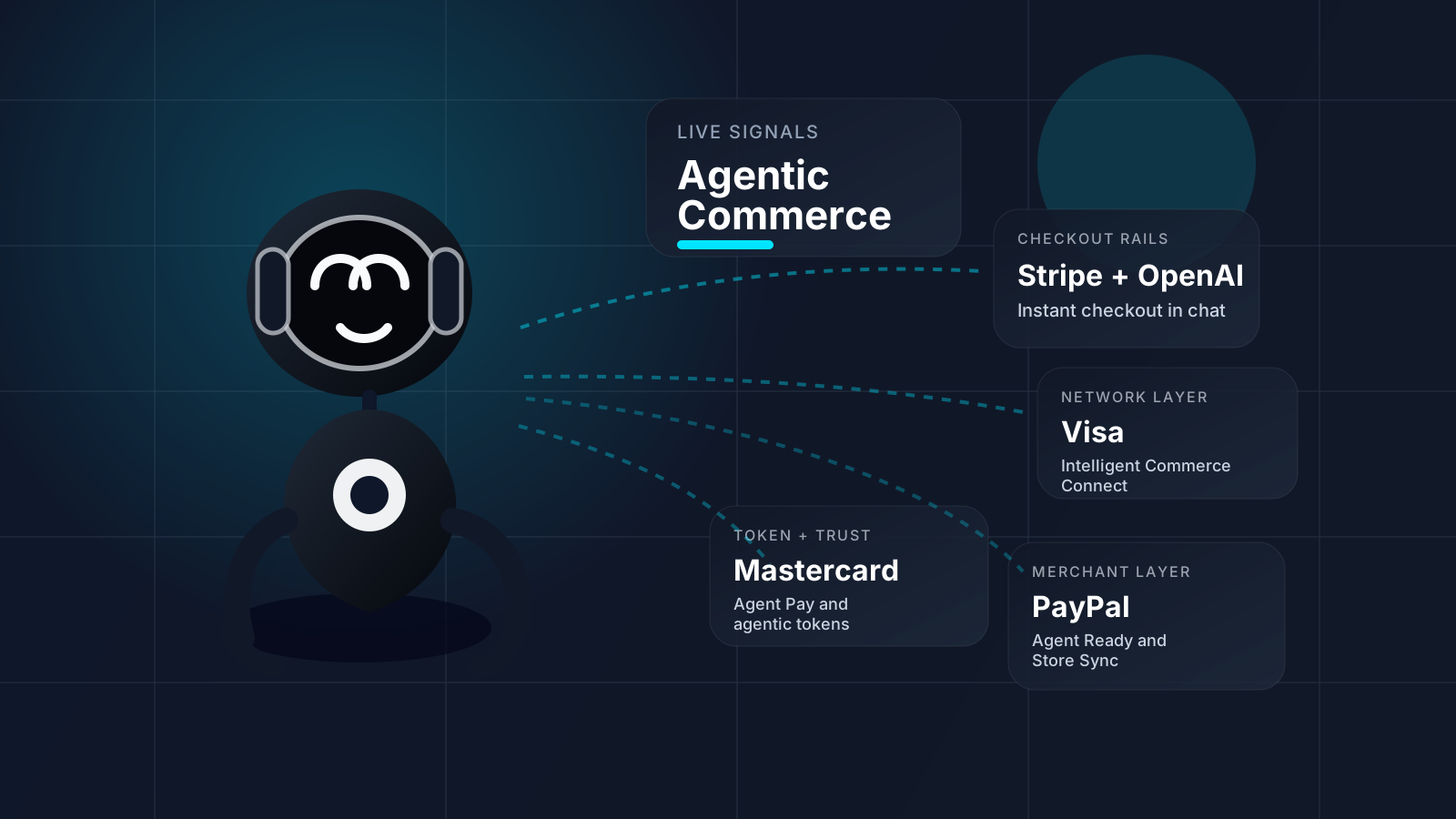
In agentic commerce, customers shop inside AI tools while payment networks, merchant platforms, and trust providers build the infrastructure that lets the purchase move beyond a recommendation.
Product copy is only one input. The real test is whether an AI assistant can find the right product, trust the merchant data, obtain the buyer's approval, and complete a safe purchase.
What is agentic commerce?
Agentic commerce extends AI search into checkout. The system can compare options and then help execute the purchase. Brands therefore need familiar search visibility plus product feeds, current inventory, clear policy data, and payment infrastructure an AI system can trust.
GEO, or generative engine optimization, applies to that evidence layer. SEO helps the product get crawled and cited. Clean, current, structured commerce data gives the model a stronger basis for surfacing it and routing the buyer onward.
What changed
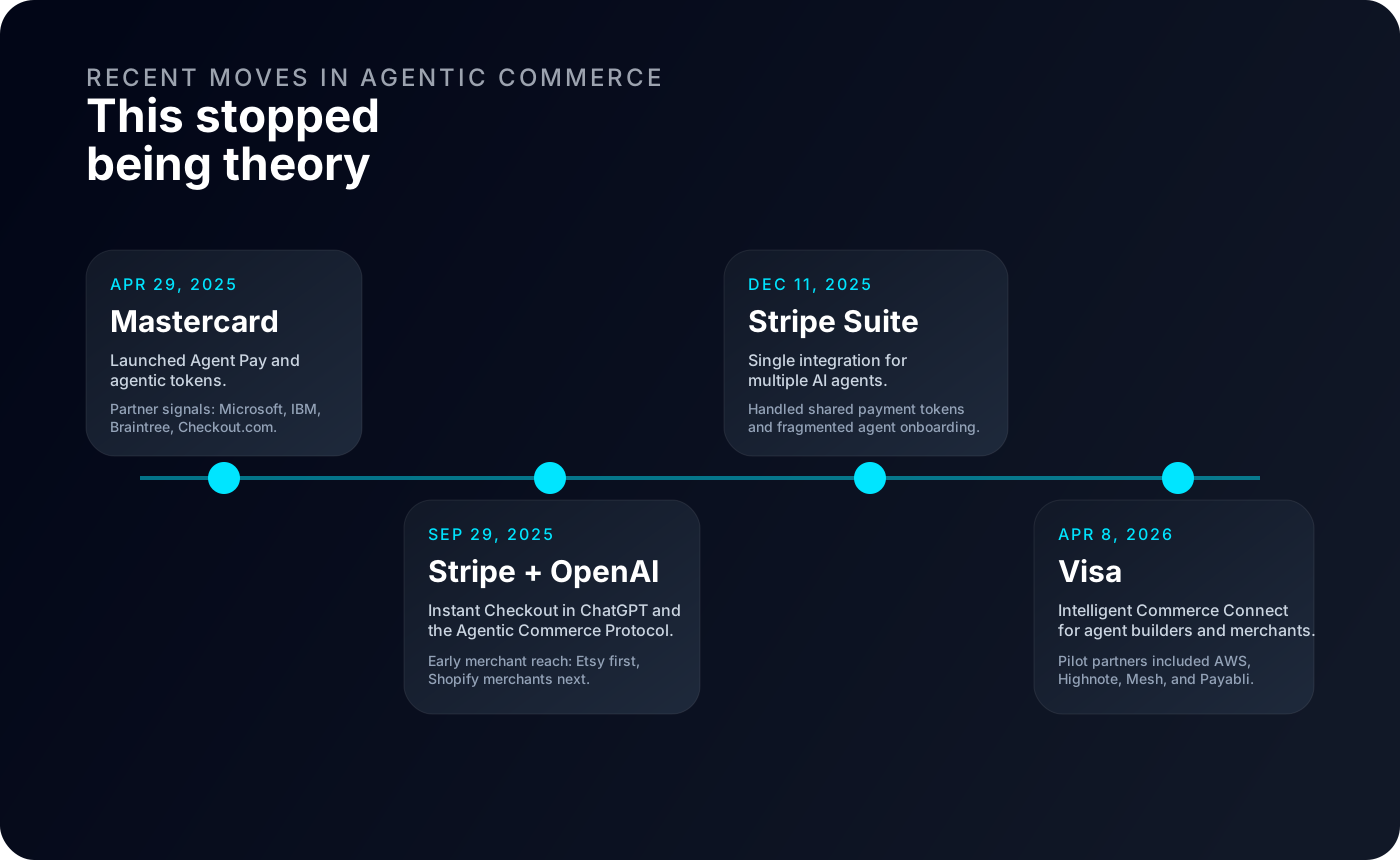
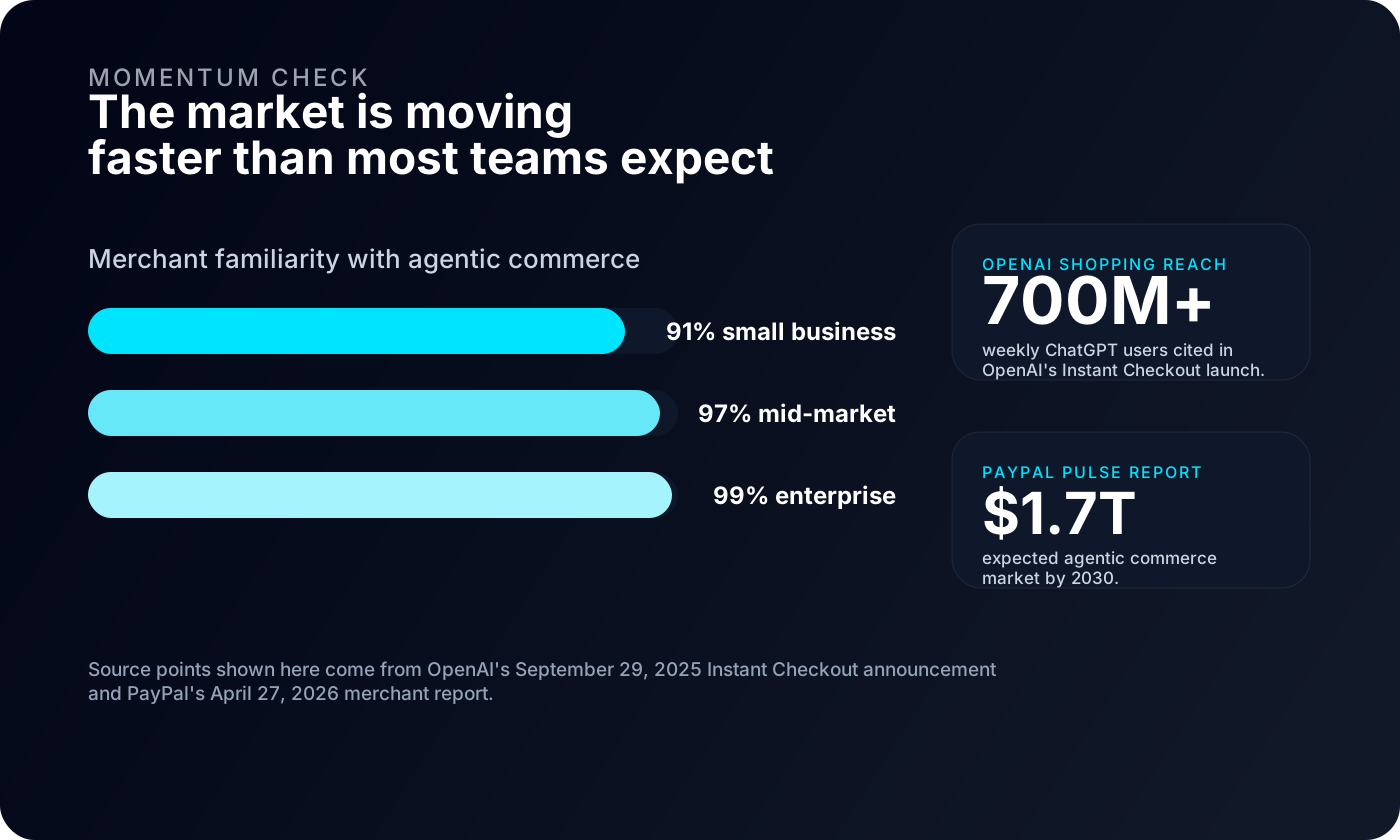
The biggest recent signal came on September 29, 2025, when Stripe announced that it was powering OpenAI's Instant Checkout in ChatGPT. OpenAI said more than 700 million people use ChatGPT each week, and that U.S. users could buy directly from eligible Etsy sellers in chat, with more Shopify merchants coming next.
That matters because it turns a loose idea into a working stack. OpenAI did not just add a shopping widget. Stripe and OpenAI also launched the Agentic Commerce Protocol, an open standard meant to let merchants, users, and AI agents work together on the purchase flow.
Then on December 11, 2025, Stripe followed with its Agentic Commerce Suite. Stripe's message was clear: a protocol alone is not enough. Merchants still need a low-code path to sell across multiple AI agents without wiring every new channel one by one.
A standing desk purchase, step by step
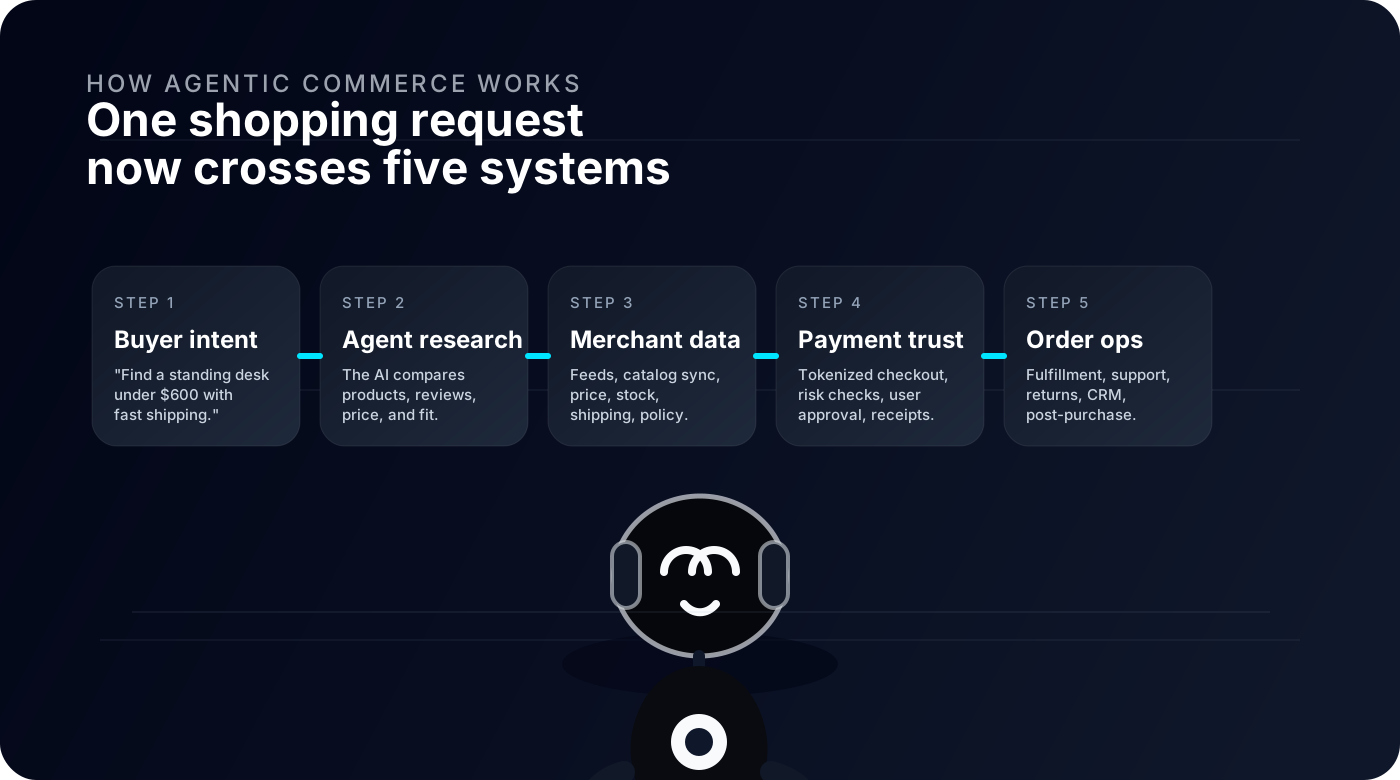
Imagine a mid-size merchant that sells premium office gear. A buyer opens ChatGPT and asks for a standing desk under a certain price, with fast delivery and a clean return policy.
One year ago, the AI might have sent them a list of links. In the newer agentic model, the AI can:
- pull current product details from merchant feeds or platform data,
- rank options based on budget, reviews, delivery speed, and fit,
- carry the buyer into checkout,
- hand the transaction to a payments and trust layer,
- then send the completed order into the merchant's normal ops flow.
That is why agentic commerce feels more like infrastructure than marketing. Once the handoff moves beyond discovery, payments, identity, fraud checks, order orchestration, returns, and customer support all become part of the product surface.
What the other companies are shipping
Visa is building the on-ramp
On April 8, 2026, Visa introduced Intelligent Commerce Connect. Visa described it as a network, protocol, and token-vault-agnostic on-ramp for agent builders, merchants, and enablers. The pilot partner list included AWS, Highnote, Mesh, Payabli, and others.
Visa's approach addresses the integration bottleneck: connecting each new agent should not require another custom deal and implementation.
Mastercard is building payment identity and controls
On April 29, 2025, Mastercard launched Agent Pay. The company framed it around Agentic Tokens, plus tighter control, visibility, and security for agent-driven payments. Mastercard also named Microsoft, IBM, Braintree, and Checkout.com as part of the rollout picture.
That says something useful: the card networks are not treating AI shopping as a thin front-end layer. They are pushing transaction permissioning and payment identity deeper into the stack.
PayPal is targeting merchant adoption
PayPal now has a dedicated agentic commerce services page built around Agent Ready and Store Sync. Its pitch is practical: connect once, reach multiple AI channels, keep customer relationships, and bring fraud tools with you.
On April 27, 2026, PayPal also published a merchant-focused agentic commerce report. The report says 91% of small businesses, 97% of mid-market merchants, and 99% of enterprises report at least some familiarity with agentic commerce. It also points to a projected $1.7 trillion market by 2030.
Those survey responses indicate merchant awareness, not completed deployments. They make acquisition, conversion, and order operations worth examining while keeping adoption claims separate from live usage.
OpenAI is also building the merchant side of discovery
OpenAI's merchant guidance page makes the discovery side of the market more explicit. Merchants can apply to share product feeds so ChatGPT has richer pricing, images, reviews, and availability data. If a merchant sells through Shopify or Etsy, OpenAI says that catalog is already integrated.
This is the bridge between SEO and GEO. If you want an AI to recommend your product well, it needs stronger input than a pretty landing page and a few meta tags.
What this means for merchants and operators
Check the store's plumbing before adding another sales channel. The product record, catalog distribution, approval process, and post-purchase work all need to hold up when an agent brings the order.
- Clean product data: titles, descriptions, variants, price, inventory, shipping, and policy details must be structured and current.
- Reliable catalog distribution: a merchant should know how product data reaches ChatGPT, Shopify, marketplaces, and any channel sync layer.
- Trusted payment approval: the customer still needs clarity and control. Tokenized or agent-friendly checkout only works if the trust model is obvious.
- Operational follow-through: if the order completes, support, returns, fulfillment, and CRM still need to work as normal.
- GEO discipline: if an AI cannot confidently interpret your offer, it will surface someone else.
Why Stripe's move stands out
Stripe's announcements stand out because they joined three layers that are often treated separately: discovery, checkout, and merchant adoption.
First, the OpenAI launch created a visible front-end moment that normal buyers can understand. Second, ACP gave the market an open protocol story. Third, the Agentic Commerce Suite addressed a more boring but more important truth: merchants do not want ten custom integrations just to sell into ten AI agents.
The sequence covered the protocol, the payment rails, and the merchant integration work.
The SEO and GEO checklist
If you run ecommerce, this is the practical checklist I would use right now.
- Audit which products have clear, current, machine-readable data.
- Check whether your catalog can already flow through platforms like Shopify or Etsy into AI discovery surfaces.
- Make shipping windows, return policy, brand trust, and support terms easy for both people and models to parse.
- Track which content pages actually explain the product well enough for citation, comparison, and recommendation.
- Think about where user approval happens if an agent reaches checkout.
Good SEO still matters. Pages still need to rank, load fast, and explain things clearly. But in agentic commerce, that is only half the job. The other half is making sure your products can be understood, selected, and transacted on in structured AI flows.
FAQ
Is agentic commerce live yet, or still early?
It is early, but it is live enough to take seriously. The important shift happened when companies moved from demos and theory into real checkout, tokenization, merchant onboarding, and channel sync.
Does this replace ecommerce sites?
No. It changes how buyers arrive and how the handoff to checkout can happen. A strong ecommerce site, strong product data, and strong post-purchase operations still matter.
What should smaller merchants do first?
Clean up the catalog, tighten product pages, make shipping and return data obvious, and make sure your data lives cleanly inside the commerce platform you already use. That work helps both SEO and GEO.
Bottom line
As of May 6, 2026, the story is no longer whether agentic commerce is possible. It is which part of the stack each company wants to own.
Stripe is pushing protocol and merchant rails. OpenAI is shaping discovery and in-chat buying. Visa and Mastercard are pushing payment trust and interoperability. PayPal is pushing merchant adoption and multi-channel reach.
For merchants, the useful next step is to make products easier to understand, verify, and buy. An AI announcement will not fix a missing variant, stale inventory, or an unclear return policy.
Sources
- Stripe newsroom, September 29, 2025: Instant Checkout in ChatGPT and Agentic Commerce Protocol
- OpenAI, September 29, 2025: Buy it in ChatGPT
- Stripe newsroom, December 11, 2025: Agentic Commerce Suite
- Mastercard newsroom, April 29, 2025: Agent Pay
- Visa newsroom, April 8, 2026: Intelligent Commerce Connect
- PayPal agentic commerce services
- PayPal report, April 27, 2026: What merchants really think about agentic commerce
- OpenAI merchant guidance: product discovery in ChatGPT
If your site sells anything, now is the time to get your product and trust data in order.
Start with a product whose data, checkout flow, and support terms you can check end to end. That gives both people and AI systems a clearer basis for trusting the purchase.
Talk With Deploy Agentic