TLDR
Treat each purchasable variation as a specific offer. Keep its image, price, stock, delivery, return terms, and identifiers aligned across the places customers and machines use.
What people search for
AI shopping product variants, ecommerce variant data, product group structured data, size and color product feed, and product data quality.
Why this matters now
Shopping interfaces can assemble answers from several records. A generic parent page cannot safely stand in for a sold out, differently priced, or restricted variant.
The simple version
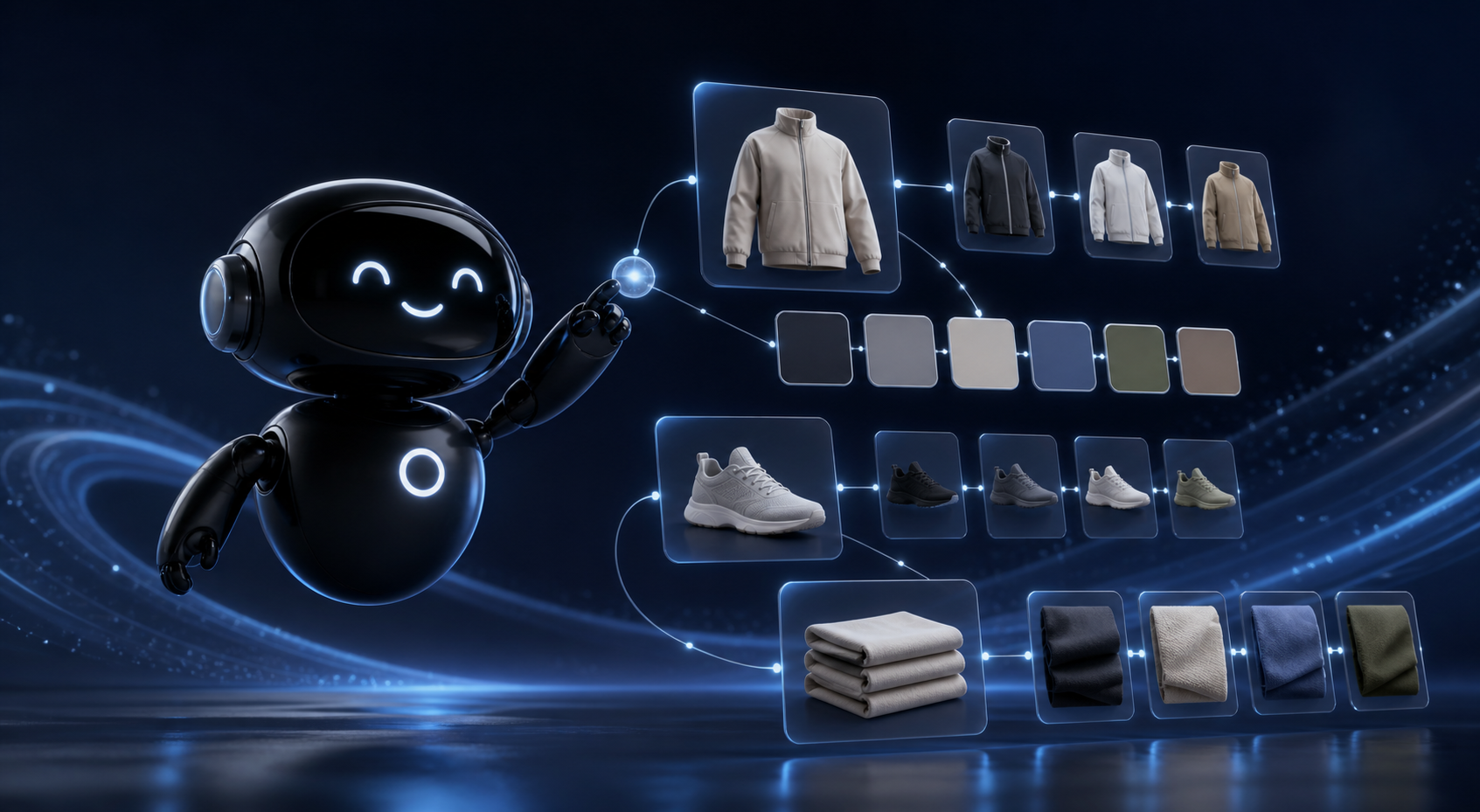
Treat a black shoe in size nine and a tan shoe in size eleven as separate offers within the same family. Photos, prices, stock, shipping dates, and return limits may differ. Give each version a distinct identity and keep the selected version visible through the buying decision.
How should product variants work in AI shopping?
Your business needs to prove the facts for the exact item a customer selects. The parent product holds the shared identity. The variant carries anything that changes, including color, size, material, condition, price, stock, image, and offer page. Keeping that split clear stops an unavailable or different version from standing in for the item the buyer asked about.
Search documentation uses product groups to connect variants under one parent while identifying the properties that vary. It also calls for variant specific product and offer information when those facts differ. Apply the same model outside the markup. The storefront, feed, inventory source, support tools, and checkout should return one answer for the selected version.
Clean variant records give the team a specific offer to test and repair. They cannot guarantee that a shopping result or AI answer will feature it.
Which facts must stay with the selected variant?
Start with the facts that can change the customer decision or the promise your business makes. A parent title and broad description may be shared. Do not let shared copy hide a price difference, a stock gap, a different image, a delivery delay, or a material change.
| Fact | Keep at parent level when | Keep at variant level when | Customer risk if wrong |
|---|---|---|---|
| Name and description | The claim applies to every version | Fit, material, bundle, or use changes | Buyer receives the wrong expectation |
| Image and color | A shared image shows every choice clearly | The chosen color, pattern, or model differs | Buyer cannot confirm the item |
| Price and stock | They are identical across versions | A selection changes price or availability | Wrong promise or abandoned checkout |
| Delivery and returns | The rule applies to the full family | Location, size, condition, or item type changes it | Support contact or dispute |
| Identifier and URL | The parent is the only sellable record | The version is separately purchased or tracked | Systems merge separate offers |
Use the table as a review tool before a catalog release. It gives merchandising, operations, and support one decision rule: if a buyer can receive a different answer after choosing the option, store and show the fact for that option.
A variant truth check
The systems can use different databases. What they need is an agreed source of truth, a check for disagreement, and someone responsible for correcting it. That is the operating model shown here.
Where do variant records drift in a real ecommerce team?
Watch ordinary catalog changes for drift. A new color, sale price, paused size, or replacement photo may reach the storefront while the feed, markup template, promotion rule, or support article keeps the old value.
Run a small applied review before a promotion, seasonal drop, catalog migration, or new AI shopping workflow. Select ten parent products with high search demand, a mix of options, and recent customer questions. For every purchasable version, compare the visible page, selection state, structured data, feed record, inventory result, policy rule, and checkout outcome. Record the owner and correction path for each mismatch.

Publish customer facing proof in the same cycle. A clear size guide, current delivery rules, visible return terms, authentic reviews, and accurate directory details help a buyer assess an offer. They also prevent an AI or support workflow from trying to reconcile conflicting claims. Keep those claims aligned with the product record rather than using broad marketing copy as a substitute for facts.
How do structured data and product feeds support the work?
Structured data and feeds help systems interpret information, but neither replaces visible product content or clean operational records. Product variant markup can connect a parent product to its variations through a product group and identify the properties that vary. Merchant listing guidance also expects a page to meet quality and policy requirements. Test the pages your customers can access, then test the machine readable output your systems publish.
Test the selected variant through the release checklist. Check its visible price, stock, image, identifier, shipping, and return terms. Include unavailable, discounted, back ordered, and restricted variants; they reveal where a generic parent-product answer breaks down.
Search guidance for AI features still points back to crawlable, useful content and accurate structured data. That work can improve understanding, but it does not guarantee selection, citation, traffic, or sales. Treat the work as customer truth and data hygiene first.
What should a team measure after fixing variant data?
Measure the points where product disagreement reaches a customer. Track catalog errors found before release, variant related support contacts, order corrections, feed disapprovals, checkout exits after selection, refunds tied to wrong item expectations, and the time between an inventory change and its appearance on the product page. Review examples with the people who own merchandising, operations, support, and engineering.
Do not isolate this as a search project. The same product truth affects paid campaigns, shopping feeds, support replies, marketplace listings, and AI assisted discovery. A good record lets every channel answer with the same terms. A bad record creates a conflict that a customer must sort out.
Frequently asked questions about AI shopping product variants
What is product variant data for AI shopping?
Product variant data identifies the exact version of an item a customer can buy. It connects the parent product to facts such as size, color, material, price, stock, image, and the offer page for that version.
Should every product variant have its own price and availability?
Yes, when those facts differ. A customer and a shopping system need the price, stock status, image, and offer details for the selected variant, not a generic parent product promise.
Does ProductGroup markup guarantee an AI shopping result?
No. Accurate product markup can help systems understand the relationship between variants, but it does not guarantee crawling, eligibility, rich results, AI placement, traffic, conversion, or revenue.
Next Step
Find the product records that confuse buyers
Deploy Agentic can trace a focused product group across its pages, feeds, policies, support tools, and checkout. You get a repair plan with a named owner and release check for each gap.
Plan a product data reviewRelated Deploy Agentic guides
Use the AI shopping data release guide to organize routine product updates. The return policy data guide helps when terms change by item or category. Pair this work with the AI shopping exception queue guide when a missing fact needs human review. Browse more applied work in the Deploy Agentic blog, or see how we connect operating systems in the ecosystem and engineering sections.
Sources
- Product variant structured data, reviewed August 7, 2026.
- Product structured data, reviewed August 7, 2026.
- Merchant listing structured data, reviewed August 7, 2026.
- ProductGroup vocabulary, reviewed August 7, 2026.
- Search guidance for AI features, reviewed August 7, 2026.